ServicesRoot Canals
Root Canals in Lake Dallas
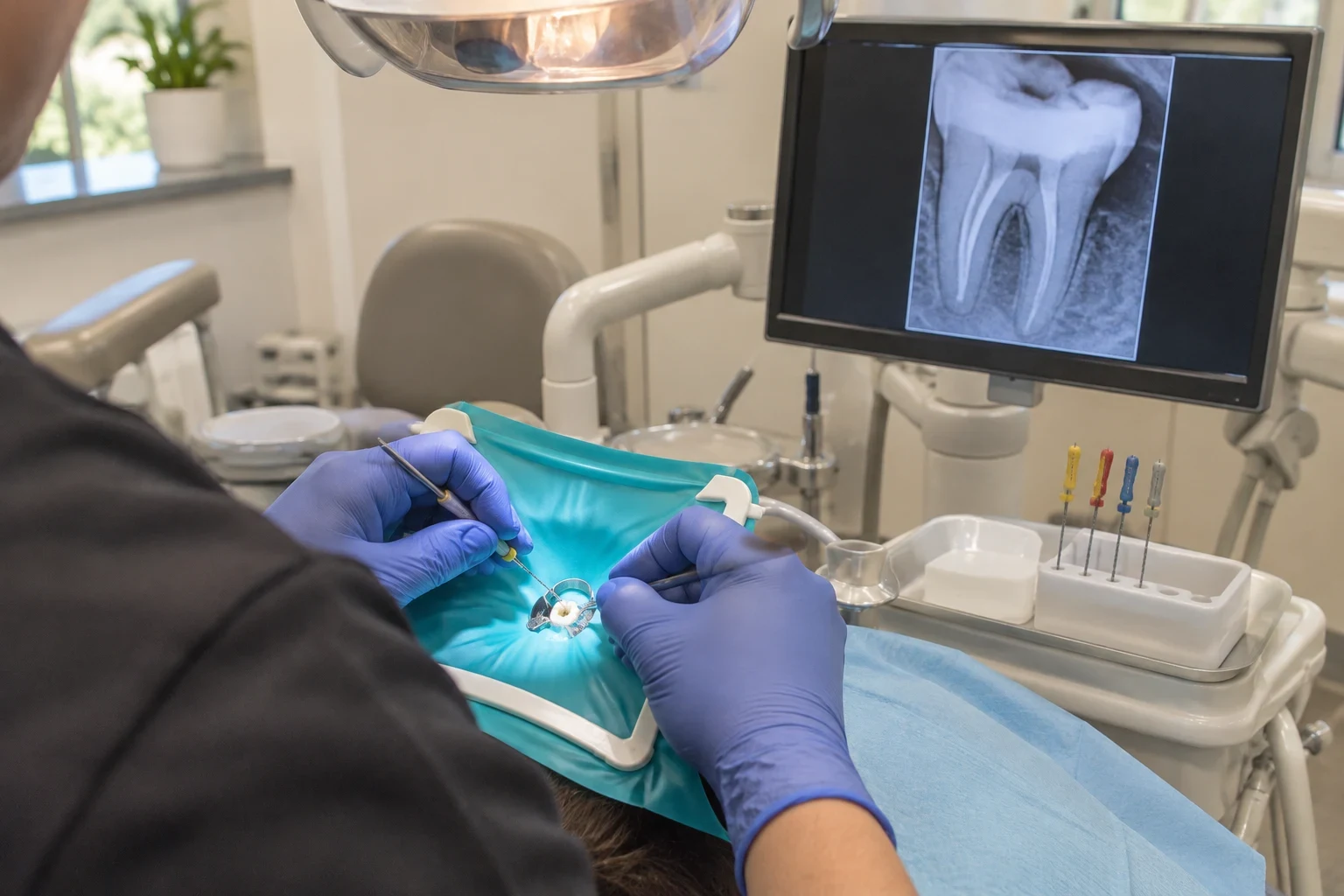
A root canal removes the inflamed or infected pulp inside a tooth, seals it and lets you keep the tooth you have. We numb the area thoroughly, work at a careful pace and check back after treatment so you know the tooth is healing the way it should.
How a Root Canal Saves a Damaged Tooth
Deep in the center of a tooth sits the pulp, a soft core of nerve tissue and blood vessels. Bacteria find their way in through a cavity that has gone too deep, a crack in the enamel or an old filling that has started to leak at its edges. An infected pulp has no way to recover by itself, so the ache or swelling tends to come back even after a quiet spell.
Treating the canals is often the least invasive fix. The root stays anchored in your jaw, which helps preserve the bone and keeps your bite steady. When the exam and images tell us the tooth is cracked or too weak to keep, we say so directly and walk you through extraction and dental implants as the alternative, so your decision rests on the whole story.
What Your Root Canal Treatment Includes
Exam and 3D imaging
We start with digital X-rays and, when the roots are curved or hard to read, a CBCT scan. This shows the number of canals, the shape of each root and whether infection has spread into the bone.
Thorough numbing
Local anesthetic is placed slowly and tested before we begin. If you feel anything during treatment, we stop and add more.
Cleaning and shaping the canals
We remove the infected pulp, clean each canal with fine instruments and rinse it with disinfecting solution. A rubber dam keeps the tooth dry and keeps debris out of your mouth.
Sealing the tooth
The canals are filled with a rubber-like material called gutta-percha and sealed. A filling closes the access opening until the tooth is ready for its final restoration.
A crown when it is needed
Back teeth that have had a root canal tend to become brittle. We usually recommend a crown to protect them from cracking under chewing pressure, and we explain why before anything is scheduled.
Signs a Tooth May Need a Root Canal
Lingering sensitivity
A sharp twinge to hot or cold that stays for a minute or more after the drink is gone often points to an irritated nerve.
Pain when you bite
Tenderness when chewing or tapping on one tooth can mean inflammation at the tip of the root.
A pimple on the gum
A small bump that drains or comes and goes near one tooth is usually a sign of infection draining from the root.
A darkening tooth
A tooth that turns gray following an old injury may have a pulp that has died, even if it no longer hurts.
Swelling in the gum or face
Puffiness around a tooth or along the jaw needs prompt attention. Infection that spreads becomes harder to treat.
How Treatment and Follow-Up Work
- 1
Focused evaluation
We examine the tooth, take images and test how it responds. You leave with a written treatment plan that lists what we recommend and why.
- 2
Treatment visit
Most root canals take one visit of about an hour to ninety minutes. Teeth with several canals or heavy infection sometimes need a second visit, with medication placed in between.
- 3
Care instructions
Before you go, we explain what soreness is normal for the next few days, what to eat, and how to protect the temporary filling until the tooth is restored.
- 4
We check back
A few days later we reach out to ask how the tooth feels. If anything seems off, we see you again before it becomes a bigger problem.
- 5
Final restoration and review
Once the tooth has settled, we place the crown or permanent filling. At later checkups we take an X-ray to confirm the bone around the root is healing.
What Affects the Cost of a Root Canal
The price depends mostly on which tooth needs treatment and what we find inside it. You get a written estimate before any treatment begins, so nothing comes as a surprise. We are in-network with more than 15 major PPO dental plans, and patients without insurance can join our in-house membership plan. You can also spread the cost over as long as 24 months with 0% interest financing, and seeing whether you preapprove has no effect on your credit score.
- Which tooth
- Front teeth usually have one canal. Molars can have three or four, which takes more time and care.
- Root complexity
- Curved, narrow or calcified canals take longer to clean and shape properly.
- The crown that follows
- Many treated back teeth need a crown, which is a separate part of the estimate.
- Your coverage
- PPO benefits often cover a meaningful share of root canal treatment. We check your plan and show you what to expect before you commit.
What Patients Ask Before a Root Canal
Something not covered here? (940) 291-9604
Will I feel pain during the procedure?
Once the anesthetic has taken hold, most patients say it feels about like having a filling placed. Many leave more comfortable than they arrived, because the inflamed nerve causing the ache has been removed. Expect a few days of mild tenderness, which over-the-counter pain relief usually handles well.
Do I need to take time off work afterward?
In most cases, no. Plenty of patients return to their usual day straight from our office. Your lip and cheek may stay numb for a few hours, so wait until feeling returns before you eat. Until the final restoration is in place, chew on the opposite side.
Wouldn't it be simpler to remove the tooth?
Holding on to your natural root keeps the jawbone active and keeps the neighboring teeth from shifting into an open space. Sometimes extraction really is the better choice, but filling that gap later with an implant or bridge means more visits and more expense. We explain both options plainly so you can decide.
How many years will a treated tooth hold up?
A well-sealed tooth, protected by a crown when it sits in the back of the mouth, can serve you for many years. The main threats are a fracture or fresh decay along the margins. We look at the tooth at your regular checkups to catch either one early.
What should I do if the tooth is still sore weeks later?
Call and tell us. Ongoing discomfort can point to a hidden extra canal or a fine crack, and the sooner we see it, the more options you have. Checking in after treatment is a routine part of how we care for every root canal patient.
Find Out If Your Tooth Can Be Saved
A focused evaluation includes an exam, digital X-rays, a CBCT scan if needed and a clear treatment plan. Patients come to us from Lake Dallas, Corinth, Hickory Creek and nearby towns.