ServicesExtractions
Tooth Extractions in Lake Dallas
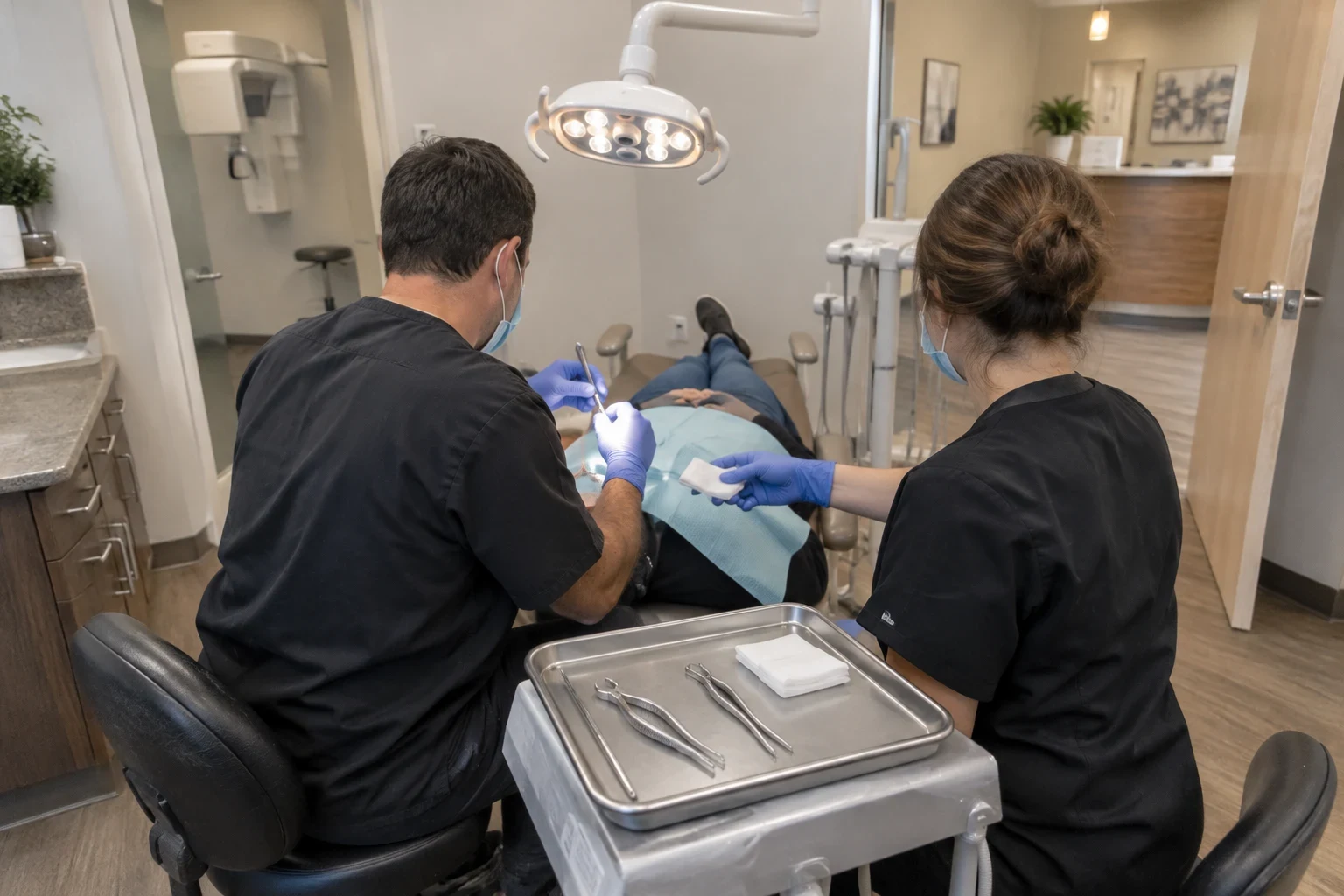
When a tooth is too cracked, infected or loose to save, we remove it gently, with careful numbing and a clear plan for what comes next. We check in once the tooth is out and walk you through healing, so you know what normal feels like.
When Removing a Tooth Is the Right Call
We try to keep natural teeth whenever it makes sense. A root canal or a crown can often rescue a tooth that looks hopeless at first. Sometimes it can't. A crack that runs below the gumline, decay that has reached the bone or a tooth loosened by advanced gum disease will keep causing pain and infection until it comes out.
Before we recommend an extraction, we show you the X-rays and explain why saving the tooth isn't a good option. You hear the alternatives and the honest tradeoffs, then you decide.
Removal is rarely the end of the story. A gap left open lets neighboring teeth drift and the jawbone shrink, so we talk about replacement from the start, whether that's dental implants, a bridge or dentures.
What Your Extraction Includes
Imaging before we begin
Digital X-rays show the shape of the roots and how close they sit to nerves and the sinus. When a tooth is in a tricky spot, a CBCT scan gives us a 3D view so there are fewer surprises in the chair.
Thorough numbing
We numb the area fully and test it before starting. You'll feel pressure, but you shouldn't feel sharp pain. If you do, tell us and we stop.
Simple and surgical removal
A tooth that's fully visible can usually be loosened and lifted out in one piece. A broken or curved-root tooth may need to be sectioned and removed in parts, which is often gentler on the surrounding bone.
Protecting the socket
If you're planning dental implants, we may suggest placing graft material in the socket to help hold the bone's shape while it heals. We explain whether it's worth it in your case.
Written care instructions and a check-in
You leave with clear instructions for the first few days. We reach out in the days that follow to ask how you're feeling and answer questions while they're fresh.
Signs a Tooth May Need to Come Out
A crack below the gumline
Cracks that split the root can't be sealed. Biting often causes a sharp, quick pain that comes and goes.
Swelling or a pimple on the gum
A recurring bump or swelling near one tooth often means infection at the root. If a root canal isn't possible, removal may be the safest fix.
A tooth that moves
Looseness in an adult tooth usually points to bone loss from gum disease. Past a certain point, the tooth can't be stabilized.
Decay that has gone too far
When there isn't enough healthy tooth left to hold a filling or crown, we'll show you the X-ray and talk through options.
Crowding before orthodontic work
Some treatment plans need space. We'll coordinate with your orthodontist if that's the reason.
How Your Appointment Goes
- 1
Exam and plan
We look at the tooth, take imaging and talk through whether it can be saved. If removal is best, we go over replacement options and timing before scheduling.
- 2
Numbing and removal
Once you're comfortable and fully numb, we gently widen the socket and lift the tooth out. Most simple extractions take only a short time once numbing has set in.
- 3
Closing the site
We place gauze to help a clot form and add stitches if needed. If grafting is part of the plan, it's done now. You rest a few minutes before heading out.
- 4
Healing and follow-up
We check back with you in the days that follow to see how the site is settling. If something feels off, such as throbbing pain that worsens past day three, we want to hear from you so we can see you.
What Shapes the Cost of an Extraction
The price depends mostly on how the tooth needs to come out and what happens next. We give you a written treatment plan with each line item before any work begins. We're in-network with more than 15 major PPO dental insurance plans, and we offer an in-house membership plan for patients without insurance.
- Simple or surgical
- A visible tooth that lifts out cleanly costs less than one that's broken at the gumline or needs to be sectioned.
- Root shape and position
- Curved, long or fused roots take more time and care, especially near a nerve or the sinus.
- Bone grafting
- Socket grafting adds to the cost but can make a future implant simpler. It's optional, and we explain the tradeoff.
- Replacement plan
- Pairing an extraction with dental implants, a bridge or dentures changes the overall plan. Financing at 0% interest for up to 24 months is available, and checking preapproval doesn't affect your credit score.
Extraction Questions We Hear Often
Something not covered here? (940) 291-9604
Will it hurt?
The numbing does most of the work. You'll feel pressure and some pushing, but sharp pain isn't normal during the procedure, and we stop if you feel any. Once the numbing wears off, most patients manage soreness with over-the-counter pain relief for a few days.
How long does healing take?
The gum usually closes over in one to two weeks, while the bone underneath keeps filling in for a few months. Most people return to normal routines the next day. Our check-in call is a good time to ask whether your healing looks on track.
What is dry socket and how do I avoid it?
Dry socket happens when the blood clot in the socket is lost too early, leaving bone exposed and painful. Skip straws, smoking and hard rinsing for the first few days, and follow your written care instructions. If pain gets worse instead of better around day three, let us know.
Can I get an implant right when the tooth comes out?
Sometimes. It depends on infection, bone quality and where the tooth is. Often we place a graft first and let the site heal before placing the implant, and we'll explain which approach fits your mouth.
What should I eat while it heals?
Soft, cool foods for the first day or two: yogurt, eggs, soups that aren't hot and mashed vegetables. Chew on the other side and add firmer foods back as comfort allows.
Talk Through Your Options First
Our $25 focused evaluation includes an exam, digital X-rays, a CBCT scan if needed and a treatment plan, so you know whether the tooth can be saved before anything is removed. Patients come to us from Lake Dallas, Corinth, Hickory Creek and nearby.