ServicesDental Implants
Dental Implants in Lake Dallas
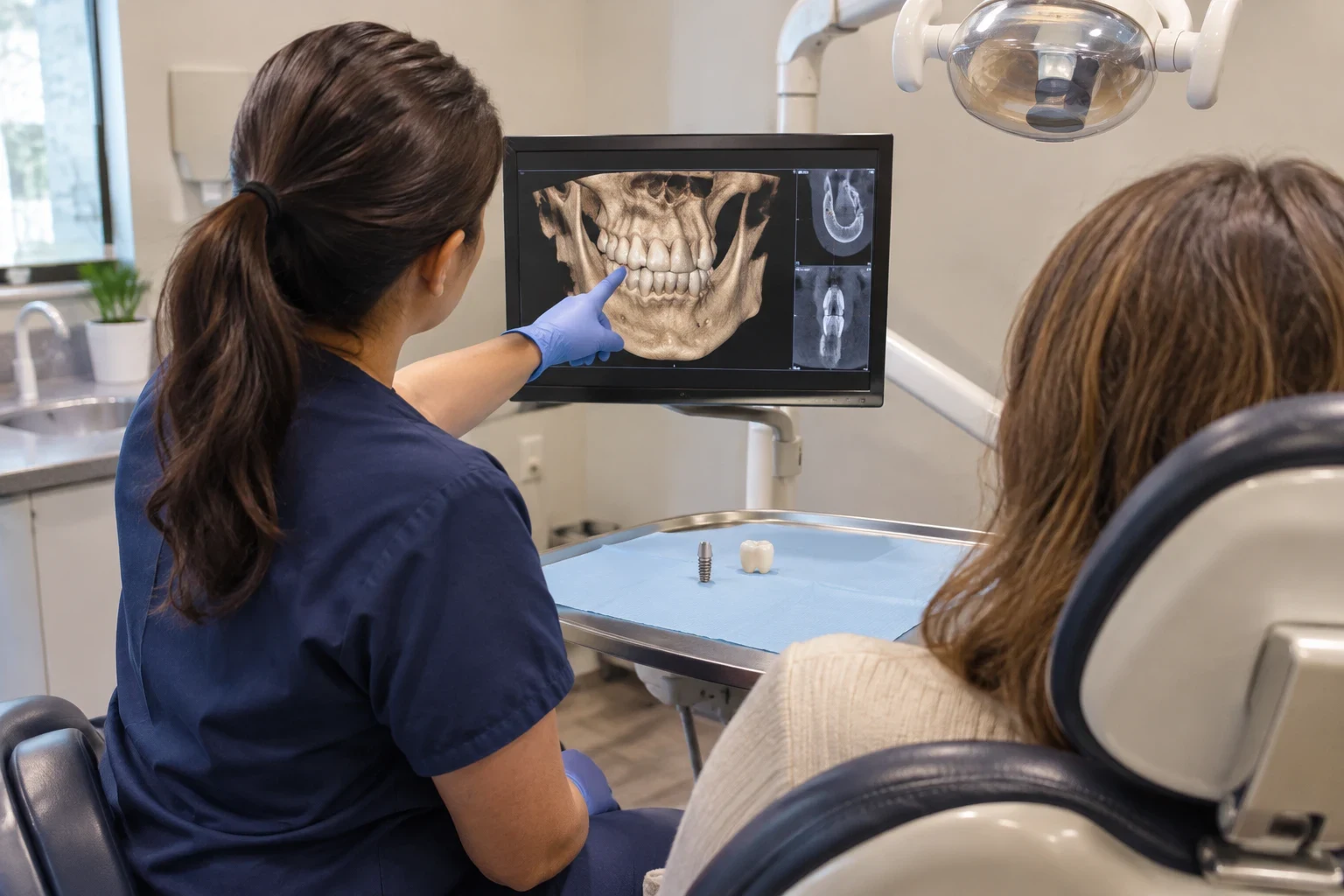
When a tooth is gone, an implant gives it a new anchor in the jaw and a crown shaped to match your smile. We plan each one from a 3D scan, place it with gentle care, and keep checking on it once the crown is in.
A Fixed Tooth That Doesn't Rely on Its Neighbors
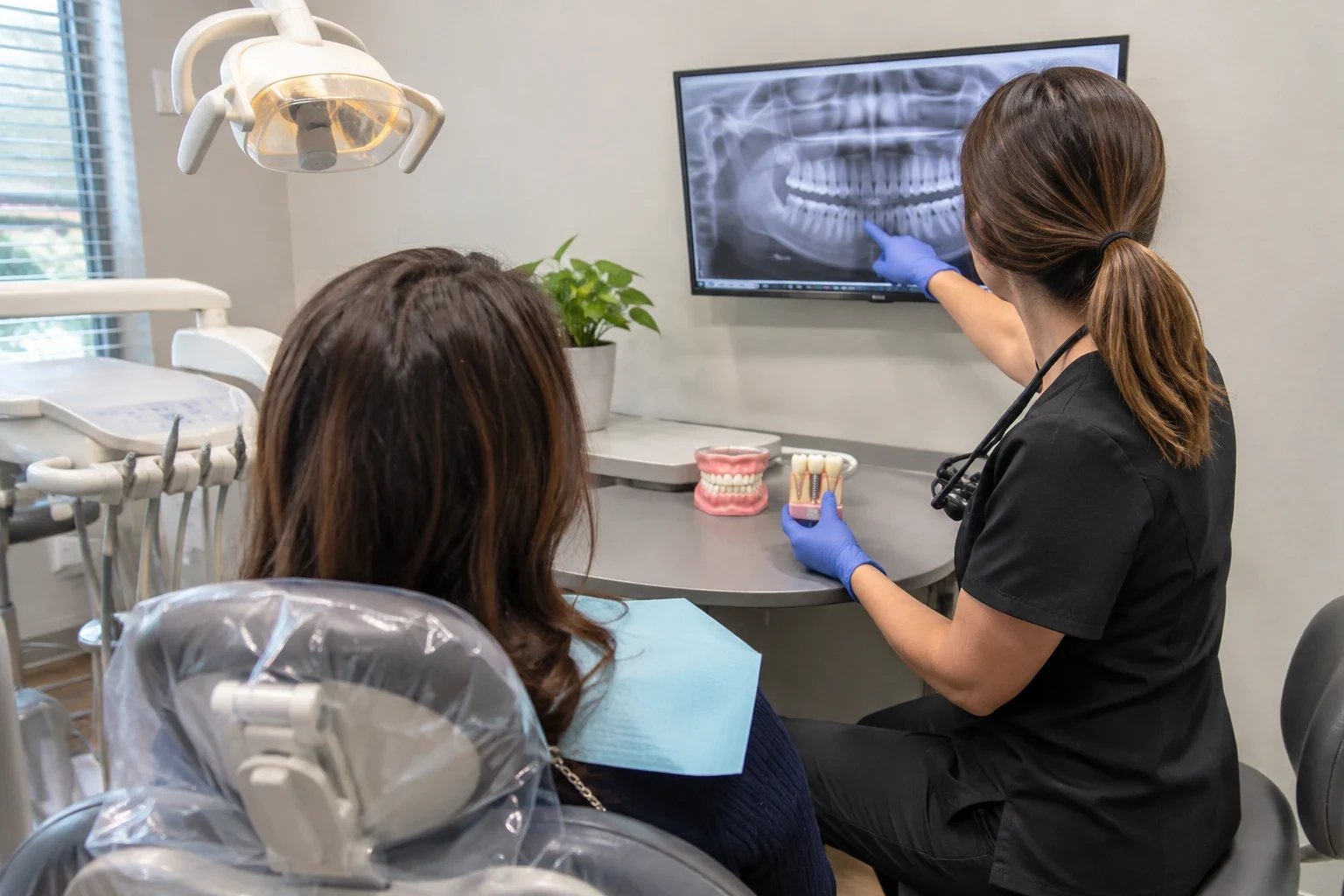
An implant is a small titanium post set into the jawbone where a tooth used to be. Bone grows tightly against it over a few months, and once it has, we attach an abutment and a custom crown. Nothing clips on, and the teeth on either side are left alone, which is the main difference from a traditional bridge.
Implants make sense when a tooth is already gone, when one can't be saved, or when a loose partial or denture has become a daily frustration. They also help keep the jawbone from shrinking where a tooth is missing.
The part many patients don't hear about elsewhere is what happens once the crown is seated. We schedule check-ins, look at the gum line and bite, and show you exactly how to clean around the implant so the work holds up.
What Your Implant Treatment Includes
- 3D planning with a CBCT scan
- The 3D image tells us how tall and wide your bone is and where the nerve canal and sinus floor sit. We use it to choose the implant size and angle before treatment starts.
- A written treatment plan
- You leave the evaluation knowing each step, the expected timeline and what each part costs. If an implant isn't the right choice for you, we say so and explain the alternatives.
- Gentle placement
- The implant is placed under local anesthetic in our office. Most single implants take about an hour, and we go over aftercare before you head out.
- Custom crown and finish
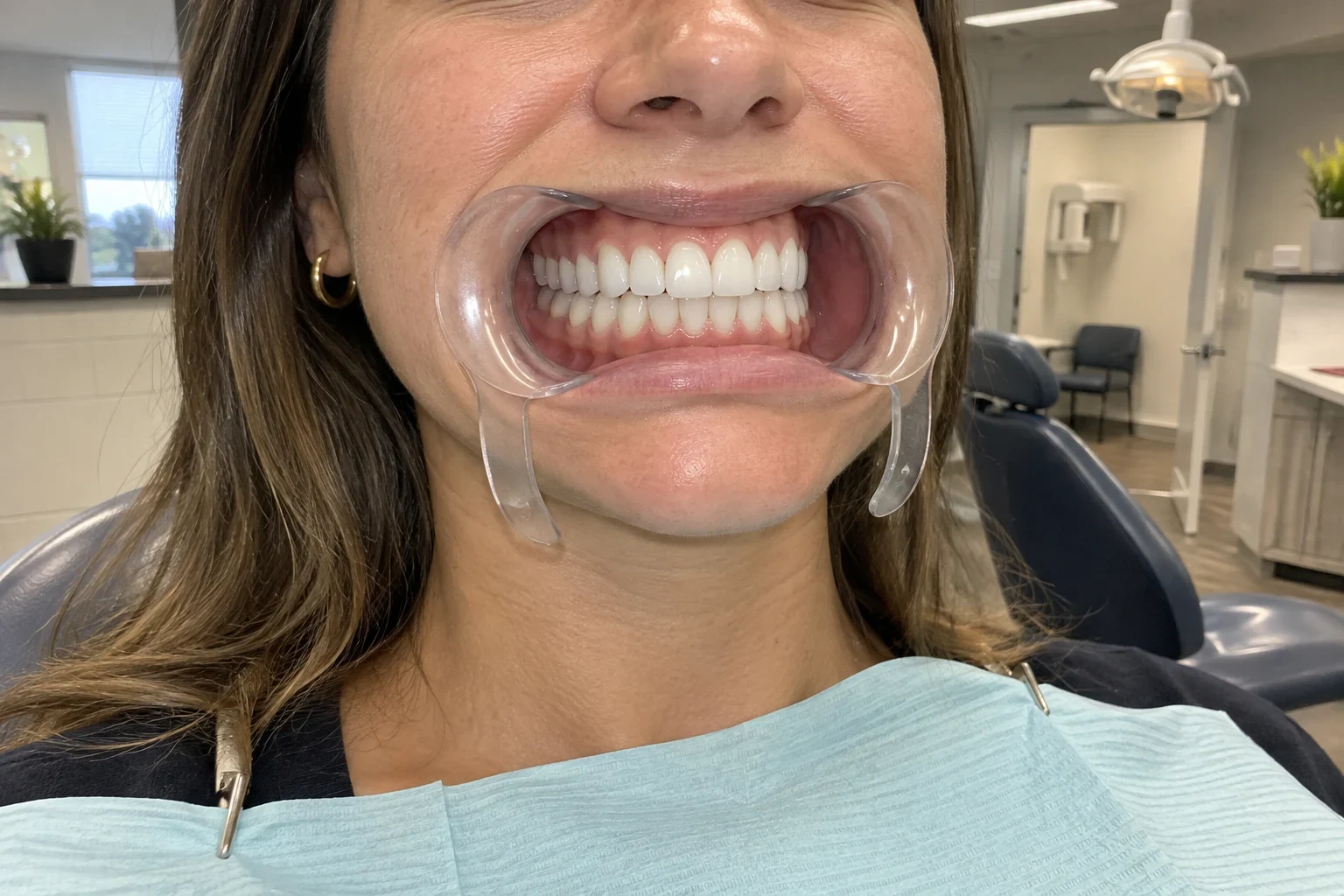
- The crown is shaded and shaped to match the teeth around it, then checked for bite so it doesn't take more force than it should.
- Follow-up once the crown is seated
- We see you again to check the gums and bite around the new tooth. You get written care instructions and a demonstration of the brushes and floss that work best around an implant.
Signs an Implant May Be the Right Call
A gap from a lost or removed tooth
Neighboring teeth tend to drift toward an empty space, and the opposing tooth can over-erupt. Filling the gap early keeps your bite stable.
A tooth that can't be saved
A deep fracture or a tooth that has failed after a root canal often can't be restored. We can plan the extraction and implant together.
A partial or denture that slips
Implants can anchor a bridge or denture so it stays put when you eat and talk.
Avoiding certain foods
If you chew on one side or skip foods you enjoy because of a missing tooth, an implant restores normal chewing.
A face that looks sunken near a gap
Bone slowly recedes where a tooth is missing. An implant gives it something to support again.
How the Process Works, Start to Finish
- 1
Evaluation and scan
Your visit includes a thorough exam, digital X-rays and a CBCT scan when needed. We talk through options and build your treatment plan.
- 2
Preparing the site
If a tooth needs to come out or the bone is thin, we handle that first. Some patients need a short healing period before the implant goes in.
- 3
Placing the implant
The post is set gently under local anesthetic. Most people return to normal routines the next day, with soft foods for a short while.
- 4
Healing and the crown
The bone typically bonds with the implant over a few months. Then we take impressions, fit the abutment and seat your finished crown.
- 5
Check-ins and care
We schedule follow-up visits to check the implant, the gums and your bite. We'll show you how to keep it clean, and we watch for early inflammation at your regular cleanings.
What Shapes the Cost of an Implant
Implant fees vary from one patient to the next, so we price from your scan and exam rather than guessing. Your written plan lists each step separately. Financing is available at 0% interest for up to 24 months, and checking whether you're preapproved won't affect your credit score. Uninsured patients can also join our In-house Membership Plan.
- How many teeth you're replacing
- One implant and crown is the simplest case. Several missing teeth may be served by a bridge or denture on fewer implants than teeth.
- Bone and gum condition
- Thin or soft bone may need grafting before placement, which adds a step and healing time.
- Extractions first
- If a failing tooth is still in place, removing it becomes part of the plan.
- The type of restoration
- A single crown, an implant bridge and an implant-supported denture differ in materials and lab work.
- Your insurance
- We're in-network with 15+ major PPO dental insurance plans. We'll check what your plan covers and show it on your estimate.
Dental Implant Questions
Something not covered here? (940) 291-9604
Does getting an implant hurt?
The area is fully numbed, so most patients feel pressure rather than pain during placement. Soreness for a few days is common and is usually managed with over-the-counter pain relievers. We give you written instructions and check how you're healing.
How long does the whole process take?
From placement to the final crown, it usually takes a few months, because the bone needs time to bond with the implant. If you need an extraction or bone graft first, the timeline is longer. Your treatment plan lays out the expected schedule.
Am I a good candidate?
Most healthy adults with enough bone, or bone that can be built up, can have implants. Smoking, uncontrolled diabetes and gum disease can affect healing, so we look at those at your evaluation. The CBCT scan answers the bone question clearly.
How do I take care of an implant?
Brush twice a day, clean around the implant daily with floss or a small interdental brush, and keep your regular cleanings. Implants can't get cavities, but the gums around them can become inflamed. We show you the technique at your follow-up and check the area at each visit.
Can implants hold a denture in place?
Yes. A few implants can anchor a denture so it snaps in securely and doesn't slip. Our Dentures page explains the options, and we can compare them at your evaluation.
Start With a Clear Plan for Your Missing Tooth
For $25, the focused evaluation covers a full exam and digital X-rays, a CBCT scan when your case calls for one, and a consultation where we map out your treatment plan. Patients come to us from Lake Dallas, Corinth, Hickory Creek and nearby towns.