
ServicesEmergency Dentistry
Emergency Dentistry in Lake Dallas
A throbbing tooth, a cracked molar or a crown that came off at dinner deserves a calm, careful answer. We find the cause, ease the pain and explain your options before any treatment begins, then check in afterward to see how you are healing.
Urgent Dental Problems, Handled Carefully
Most urgent dental visits come down to a handful of problems: an infected nerve, a tooth that has fractured, a filling or crown that has failed, or gum swelling around a tooth that is trying to come in. Each one can feel like it cannot wait. The fix depends on what is actually happening under the surface, so we start with a proper look rather than a guess.
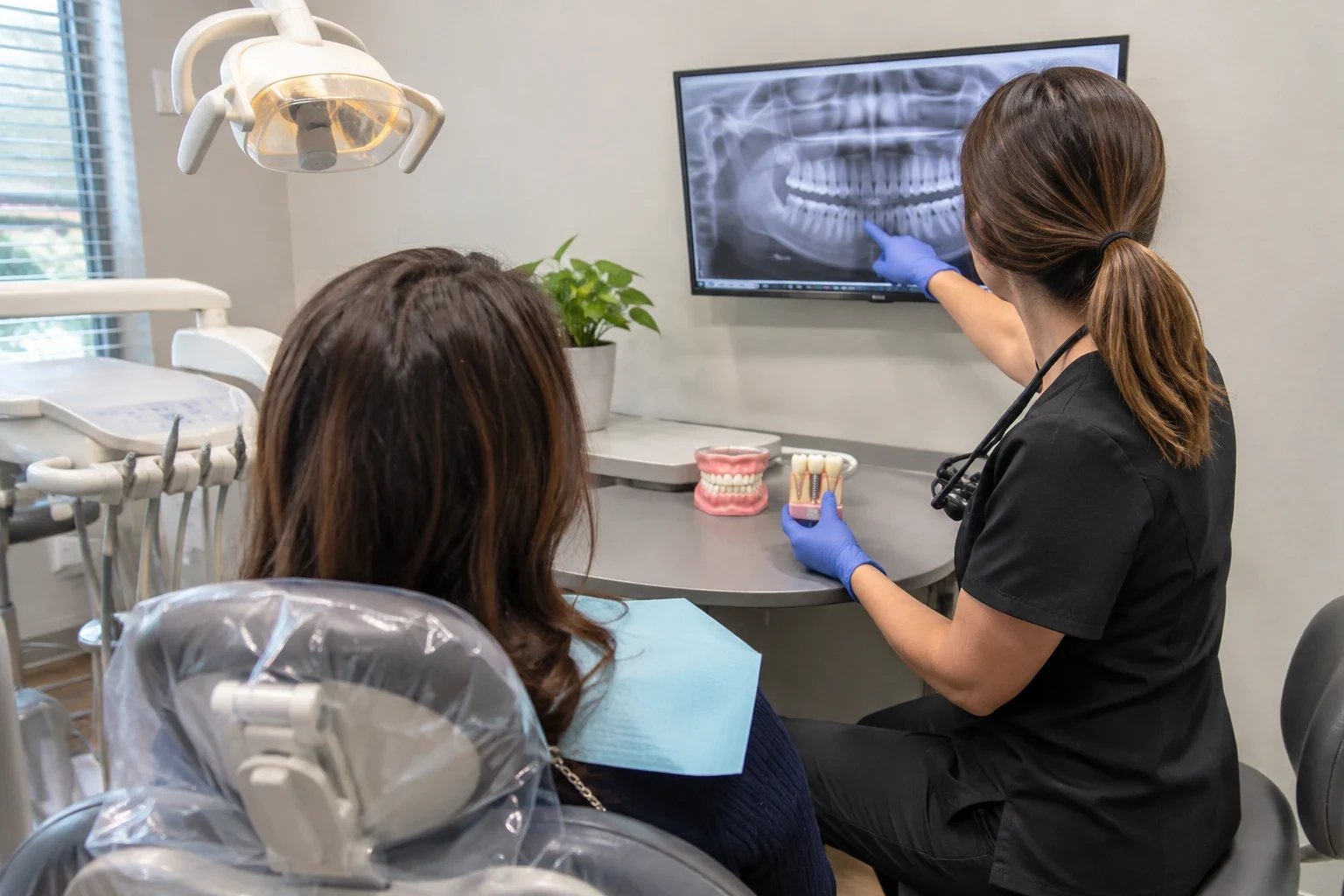
Your first visit can be our $25 Focused Evaluation. It starts with a thorough, comprehensive exam and digital X-rays, adds a CBCT scan when your case calls for one, and finishes with a consultation where we plan treatment together. That gives us enough information to tell you whether the tooth can be saved, what can wait and what should not.
Pain relief is the first goal. Lasting repair is the second, and sometimes it happens at a later visit once swelling settles. Either way, you leave knowing what was done, what comes next and how to care for the area at home.
What an Urgent Visit Includes
- 01
A focused diagnosis
We test the tooth, check the bite and take digital X-rays. If the problem sits deep in the bone or near a nerve, a CBCT scan shows it in three dimensions.
- 02
Relief for pain and pressure
Numbing the area comes first. Depending on the cause, that may mean opening an infected tooth to release pressure, smoothing a sharp edge or placing a protective temporary.
- 03
Broken teeth and lost crowns
A chipped or split tooth is cleaned and sealed so it stops reacting to cold and air. A loose crown may be recemented if the tooth underneath is sound.
- 04
Infection and swelling
Swelling usually points to an abscess. We find its source and treat the tooth, which may lead to a root canal or an extraction.
- 05
A written next step
Before you go, we explain the longer-term plan and what each option involves, so nothing about the follow-up treatment is a surprise.
- 06
A check-in after treatment
We reach out after your visit to ask how the tooth feels and answer questions about eating, brushing and medication while it heals.
Questions about Emergency Dentistry?
Call(940) 291-9604Signs a Tooth Needs Prompt Attention
Pain that wakes you up
A toothache that throbs at night or when you lie down often means the nerve is inflamed or infected. It rarely settles on its own.
Swelling in the gum or face
A bump on the gum, a puffy cheek or a bad taste that keeps returning suggests an abscess. If swelling spreads toward your eye or neck, or makes it hard to swallow or breathe, get to a hospital or call 911 right away.
A cracked or broken tooth
Sharp pain when you bite and release can mean a crack running toward the root. Caught soon, a cracked tooth can often be held together with a crown. Left alone, the crack can deepen until the tooth cannot be kept.
Lingering sensitivity
A short twinge from cold is common. Sensitivity that lasts more than a few seconds after the drink is gone is worth checking.
A lost filling or crown
An exposed tooth is weaker and collects food. Keep the crown if you have it and bring it to your appointment.
How Your Visit Goes
- 1
Tell us what happened
When you phone, describe the pain, any swelling and when it started. We use that to find the earliest appointment we have and to tell you what to do in the meantime.
- 2
Exam and imaging
We look, test and take X-rays, then show you the images so you can see the problem for yourself.
- 3
Relief and a clear plan
We treat what needs attention now and lay out the options for what remains, with costs explained before anything begins. You decide how to proceed.
- 4
Aftercare and follow-up
You get plain instructions for the next few days, and we check back to see how you are healing and whether anything has changed.
What Shapes the Cost of Urgent Care
Urgent visits vary because the cause varies. A recemented crown is a short appointment, while an infected molar may need several steps. Before any treatment starts, we walk you through the cost of each option. We are also in-network with 15+ major PPO dental insurance plans.
- What the tooth needs
- Smoothing a chip, placing a filling, a root canal and an extraction are very different procedures, and the diagnosis sets the path.
- Which tooth it is
- Back molars have more roots and are harder to reach than front teeth, which adds time to treatments like root canals.
- Temporary versus final repair
- Some problems are stabilized first and finished later with a crown or, if a tooth is lost, a replacement such as dental implants.
- Insurance and payment options
- Your PPO coverage changes what you owe, and uninsured patients can join our In-house Membership Plan. Payments can also be spread across as many as 24 months at 0% interest, and seeing whether you preapprove leaves your credit score untouched.
Questions About Urgent Dental Care
Can you see me today?
We cannot promise a specific time, but we do our best to fit urgent problems in as soon as the schedule allows. Phone us, tell us what is going on, and we will offer the earliest opening we have. We can also suggest ways to manage the pain until then.
What should I do if a tooth gets knocked out?
Pick it up by the crown, not the root, and rinse it gently without scrubbing. Try to place it back in the socket, or keep it in milk, and get to a dentist as quickly as you can. The sooner it is seen, the better the chance of saving it.
Will you just pull the tooth?
Not unless that is the right answer. If the tooth can be saved with a filling, crown or root canal, we explain that option first. When a tooth cannot be saved, we talk through extractions and what could replace it later.
I don't have dental insurance. Can I still come in?
Yes. The $25 Focused Evaluation is a low-cost way to find out what is wrong, and our In-house Membership Plan was designed with uninsured patients in mind. If treatment is needed, you can pay it off over as many as 24 months at 0% interest.
Is this pain from my wisdom teeth?
It may be. Swollen, tender gum behind your last molar often means a wisdom tooth is partly erupted and trapped food. We can confirm with imaging and talk about whether wisdom teeth removal makes sense.
Get the Tooth Looked At
A clear diagnosis is the fastest way out of pain. Phone us from Lake Dallas, Corinth or nearby, and we will set up a visit, treat what needs care and check back afterward.